Hiking Log Book: A Designer's Guide to KDP Interior Creation
Imagine transforming a simple personal passion into a beautifully designed, market-ready product. For graphic designers and creative entrepreneurs, a Hiking Log Book | KDP Interior represents more than just a journal—it's a prime example of how thoughtful visual design can elevate a functional item into a compelling brand experience, perfectly suited for the lucrative print-on-demand market.
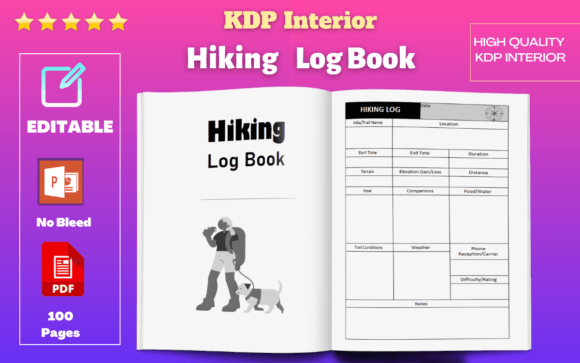
This specific interior template, designed for Amazon's Kindle Direct Publishing (KDP) platform, is a masterclass in practical editorial design. Its core function is to help travel enthusiasts meticulously document their adventures, but its true value for creators lies in its ready-to-use, professionally structured layout. The package includes a fully editable PowerPoint file and a print-ready PDF, offering unparalleled flexibility for customization or immediate deployment.
The Design Principles Behind a Successful KDP Interior
Creating a log book that sells requires more than just lined pages. It demands a keen understanding of visual hierarchy, typography, and user experience (UX). A well-designed interior guides the user's eye, makes data entry intuitive, and provides a sense of satisfaction upon completion. The 6"x9" format is an industry standard for its portability, while the 100-page count offers substantial value. The "No Bleed" specification is a critical technical detail for seamless printing.
For designers, this product is a template for success. It demonstrates how to balance aesthetic appeal with practical functionality—a key skill in branding and packaging design. The clean, uncluttered layout ensures the user's handwritten notes become the focal point, a principle central to effective editorial design.
Practical Applications and Creative Customization
The versatility of a pre-designed interior like this extends far beyond its initial purpose. It can serve as a foundational asset for numerous creative projects and business ventures.
- Brand Identity & Logo Design: Use the log book as a brand touchpoint. Its style can inform the color palette, typography, and overall aesthetic for a hiking or outdoor adventure brand.
- Digital Marketing & Social Media: Create social media graphics showcasing the log book's interior. This provides authentic, relatable content that engages an audience of outdoor enthusiasts.
- Merchandise & Packaging: The interior design can be adapted for companion products like sticker sheets, washi tape, or even the packaging for related gear, creating a cohesive brand experience.
- Web and UI Design: The clean, grid-based layout of a log book can inspire dashboard designs for fitness or travel apps, where clear data presentation is crucial.
Tips for Evaluating and Using Design Assets Effectively
When selecting any creative asset, including a KDP interior, a designer's critical eye is essential. Here’s what to consider to ensure quality and compatibility:
- Check for Scalability and Editability: A PowerPoint file offers easy customization for those without advanced design software. Always verify that fonts are embedded or included and that graphic elements are editable.
- Assess Visual Consistency: Does the design follow a consistent visual hierarchy? Are margins, gutters, and text styles uniform? Consistency is the hallmark of professional presentation.
- Consider the Audience: The design must align with user expectations. For a hiking log, this means ample space for notes, clear labels, and a durable, readable format.
- Ensure Technical Precision: Verify specifications like resolution (for high-quality printing) and bleed settings to avoid costly errors in the production process.
Ultimately, a resource like the Hiking Log Book | KDP Interior exemplifies how strategic design thinking bridges the gap between a creative idea and a tangible, marketable product. By focusing on clarity, usability, and aesthetic refinement, designers and creators can develop assets that not only look polished but also genuinely improve how users interact with and cherish the final product. In the competitive landscape of digital and print products, this attention to detail is what transforms a simple item into a valuable part of a customer's journey.