Chess Score Sheet KDP Interior: A Designer's Guide
For graphic designers and creators, the world of niche publishing offers a unique canvas for merging utility with sophisticated visual design. A prime example is the Chess Score Sheet KDP Interior, a specialized template that transcends its simple function to become a study in effective information design, brand application, and user experience.
Understanding the Design Foundation
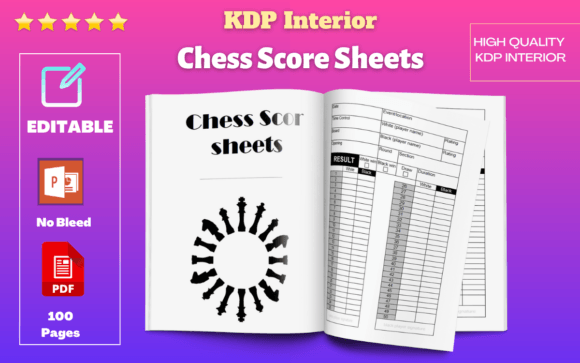
At its core, this resource is a meticulously crafted planner for chess enthusiasts, designed to track and record game activities. However, from a design perspective, it represents a complete, market-ready product. The package includes fully editable PowerPoint files and print-ready PDFs, offering immense flexibility. Sized at 6"x9" with no bleed and high-resolution vector elements, it adheres to professional print standards, making it an ideal asset for those exploring the lucrative world of low-content book publishing.
Practical Applications in Creative Projects
The true value of a Chess Score Sheet KDP Interior lies in its adaptability across various design and branding contexts. It serves as more than just a product; it's a foundational template that can be repurposed and customized for diverse client projects or personal ventures.
- Brand Identity & Marketing: Chess themes evoke strategy, intellect, and precision. This interior can be adapted into branded journals, corporate planning tools, or marketing collateral for businesses in consulting, education, or tech, reinforcing a brand identity centered on strategic thinking.
- Editorial & Packaging Design: The clean layout and visual hierarchy within the score sheets provide excellent inspiration for editorial layouts in magazines or books. The structured grids and typography can influence packaging design for premium, intellectual product lines.
- Digital & UI Design: The principles of clarity and user-centric organization seen in the score sheet are directly applicable to UI/UX design. Designers can study its use of space, typography, and form to improve data entry interfaces or dashboard layouts in web and app design.
Tips for Effective Integration
When incorporating elements from such a resource into your design workflow, consider these principles to maximize impact and maintain professionalism:
- Prioritize Consistency: Ensure any adapted design aligns with the overarching brand system. Use the provided color palette and typography as a starting point, but adjust them to fit the specific brand identity you are building.
- Focus on Readability and Visual Hierarchy: The success of a score sheet hinges on clear, scannable information. Apply this same rigor to any project. Use typographic contrast and deliberate spacing to guide the user's eye, whether in a printed planner or a digital interface.
- Evaluate for Scalability: Since the files are vector-based and resized, they are inherently scalable. This is a critical lesson for all design work. Always create assets with scalability in mind, ensuring logos, icons, and layouts look flawless from a small social media graphic to a large banner.
Ultimately, a well-executed Chess Score Sheet KDP Interior is a testament to the power of thoughtful graphic design. It demonstrates how solving a specific user need with clarity, aesthetic appeal, and technical precision can result in a valuable creative asset. For designers, marketers, and creators, investing in or studying such high-quality resources is not just about acquiring a template—it's about understanding the visual language that makes information accessible, engaging, and professionally compelling, thereby elevating the entire scope of your creative projects.